Artificial Intelligence (AI) is a rapidly advancing field that has garnered significant attention and excitement in recent years. It has the potential to revolutionize numerous industries and transform the way we live and work. From self-driving cars to virtual personal assistants, AI is already making its presence felt in our daily lives. In this blog post, we will delve into the world of AI, exploring its definition, applications, and implications for the future.
What is Artificial Intelligence?
Artificial Intelligence, in simple terms, refers to the simulation of human intelligence in machines that are programmed to think and learn like humans. It involves the development of intelligent systems that can perform tasks that typically require human intelligence. These tasks include speech recognition, decision-making, problem-solving, visual perception, and language translation, among others.
AI can be broadly categorized into two types: narrow AI and general AI. Narrow AI, also known as weak AI, is designed to perform a specific task and is highly prevalent in today’s applications. Examples of narrow AI include voice assistants like Siri and Alexa, recommendation algorithms used by e-commerce platforms, and facial recognition systems. General AI, on the other hand, refers to AI systems that possess human-level intelligence and can perform any intellectual task that a human being can do. General AI remains largely theoretical and is a subject of ongoing research.
Machine Learning and Deep Learning: Unleashing the Power of AI
In the realm of Artificial Intelligence (AI), two significant subfields have gained immense prominence: Machine Learning and Deep Learning. These innovative approaches have revolutionized the way machines learn and make decisions, enabling AI systems to tackle complex tasks and deliver remarkable results. In this section, we will delve into the concepts of Machine Learning and Deep Learning, exploring their underlying principles and real-world applications.
Machine learning is a branch of AI that focuses on the development of algorithms and models that can learn patterns and make accurate predictions or decisions based on data. It encompasses a range of techniques, including supervised learning, unsupervised learning, and reinforcement learning. In supervised learning, the algorithm is trained on labeled data, where each input is associated with a corresponding output. It learns to generalize from these examples and make predictions on new, unseen data.
Unsupervised learning, on the other hand, involves training algorithms on unlabeled data, allowing them to discover patterns and structures within the data itself. Clustering and dimensionality reduction are common tasks in unsupervised learning. Reinforcement learning is a type of learning where an agent interacts with an environment and learns to take actions that maximize a reward signal.
Deep learning, a subset of machine learning, is inspired by the structure and function of the human brain. It utilizes artificial neural networks with multiple layers of interconnected nodes called artificial neurons or units. These networks are called «deep» because they consist of many layers, allowing for the extraction of intricate and hierarchical representations of data. Each layer processes and transforms the input data, gradually learning more abstract features as it progresses deeper into the network.
Deep learning has gained immense popularity due to its ability to automatically learn features directly from raw data, eliminating the need for manual feature engineering. Convolutional Neural Networks (CNNs) excel at image and video processing tasks by using convolutional layers to detect and capture spatial patterns. Recurrent Neural Networks (RNNs) are designed for sequence data, such as language processing or time series analysis, as they can capture temporal dependencies.
One of the key advantages of deep learning is its capacity to handle large-scale and complex datasets. Deep learning models require substantial computational resources, such as powerful GPUs, and large amounts of annotated data for training. However, when properly trained, deep learning models can achieve remarkable performance in tasks like image recognition, natural language processing, speech recognition, and more.
Applications of Artificial Intelligence
Artificial Intelligence has found applications in a wide range of industries, enhancing efficiency and providing new possibilities. Here are some notable areas where AI is being employed:
Healthcare: AI is revolutionizing healthcare by enabling early detection of diseases, personalized treatment plans, and drug discovery. Machine learning algorithms can analyze medical data, identify patterns, and assist in diagnosing illnesses. Surgical robots equipped with AI capabilities can enhance precision and improve outcomes.
Finance: AI is transforming the finance sector by automating tasks, detecting fraud, and making investment predictions. Chatbots and virtual assistants are being used to provide customer support and personalized financial advice. AI algorithms analyze vast amounts of financial data to identify market trends and optimize investment strategies.
Transportation: Self-driving cars and autonomous vehicles are some of the most exciting applications of AI in transportation. These vehicles use AI systems to perceive their surroundings, make real-time decisions, and navigate safely. AI-powered traffic management systems are also being developed to optimize traffic flow and reduce congestion.
Education: AI is revolutionizing the education sector by providing personalized learning experiences. Intelligent tutoring systems adapt to individual students’ needs, providing tailored instruction and feedback. AI-powered chatbots are used to answer students’ questions and assist in their learning journey.
Manufacturing: AI is improving efficiency and productivity in manufacturing processes. Intelligent robots equipped with AI algorithms can perform complex tasks with precision, reducing errors and increasing output. AI-powered predictive maintenance systems can detect equipment failures before they occur, minimizing downtime.
The Future of Artificial Intelligence
The future of Artificial Intelligence is both promising and challenging. On one hand, AI has the potential to bring about significant advancements in various domains, improving our quality of life. However, there are also concerns and ethical considerations surrounding the development and use of AI.
One major concern is the impact of AI on employment. As AI systems become more capable, there is a possibility of job displacement. Certain tasks that were traditionally performed by humans may be automated, leading to a shift in the job market. However, AI also has the potential to create new job opportunities and lead to the development of new industries.
Another important consideration is the ethical implications of AI. Ethical implications of AI include concerns about privacy, bias, and accountability. AI systems rely on data, and if that data contains biases or reflects societal prejudices, it can lead to unfair outcomes. Additionally, AI raises questions about the privacy and security of personal information, as well as the potential misuse of AI technology. Ensuring transparency, fairness, and responsible development and deployment of AI systems is crucial to address these ethical challenges.
In conclusion, artificial intelligence is a transformative field of study that aims to develop intelligent machines capable of performing tasks that typically require human intelligence. With its broad scope, AI encompasses various subfields, including machine learning and deep learning, which have revolutionized the way we approach problem-solving and decision-making.
Архивы автора: Curie
Parts of PC
I’m just learning about parts of the computer for self-enrichment.
When it comes to building a computer, there are many different parts to consider. Each of these parts plays a crucial role in the overall functionality of the computer, and it’s important to understand what each one does before you start building. In this blog post, we’ll take a closer look at some of the most important computer parts and what they do.
- Processor (CPU)
The processor, or CPU (Central Processing Unit), is often referred to as the brain of the computer. It is responsible for carrying out all of the instructions that the computer receives from its various components and processes. The CPU’s performance is measured in clock speed, which is typically expressed in gigahertz (GHz). The higher the clock speed, the faster the processor can carry out instructions. CPUs can have multiple cores, which allows them to carry out multiple instructions at the same time.
- Motherboard
The motherboard is the main circuit board of the computer. It connects all of the other components, including the CPU, RAM, and storage devices, and provides power to all of them. The motherboard also contains important components such as the BIOS (Basic Input/Output System), which is responsible for initializing the hardware and starting the operating system.
- Random Access Memory (RAM)
RAM (Random Access Memory) is the temporary storage area that the computer uses to hold data that is currently being processed. It is much faster than the computer’s long-term storage (hard drive or solid-state drive) and is essential for the computer’s overall performance. The amount of RAM that a computer has is measured in gigabytes (GB), and more RAM generally means better performance. However, most computers have a limit to the amount of RAM they can support, so it’s important to check your computer’s specifications before upgrading.
- Storage Devices
The computer’s long-term storage is where it keeps all of its data, including the operating system, programs, and files. There are two main types of storage devices: hard disk drives (HDDs) and solid-state drives (SSDs). HDDs use spinning disks to read and write data, while SSDs use flash memory. SSDs are faster than HDDs and are becoming more common, but they are also more expensive.
- Power Supply Unit (PSU)
The PSU (Power Supply Unit) is responsible for providing power to all of the computer’s components. It converts the AC power from your wall outlet into DC power that your computer can use. PSUs are rated by their wattage, which indicates how much power they can deliver. It’s important to choose a PSU that can provide enough power for all of your components, and also to choose one with high efficiency to reduce energy waste.
- Graphics Card (GPU)
The graphics card, or GPU (Graphics Processing Unit), is responsible for rendering images and video on the computer’s display. GPUs are essential for gaming and other graphically-intensive applications. They can also be used for scientific simulations, machine learning, and other tasks that require large amounts of parallel processing. Like CPUs, GPUs can have multiple cores and are rated by their clock speed.
- Cooling System
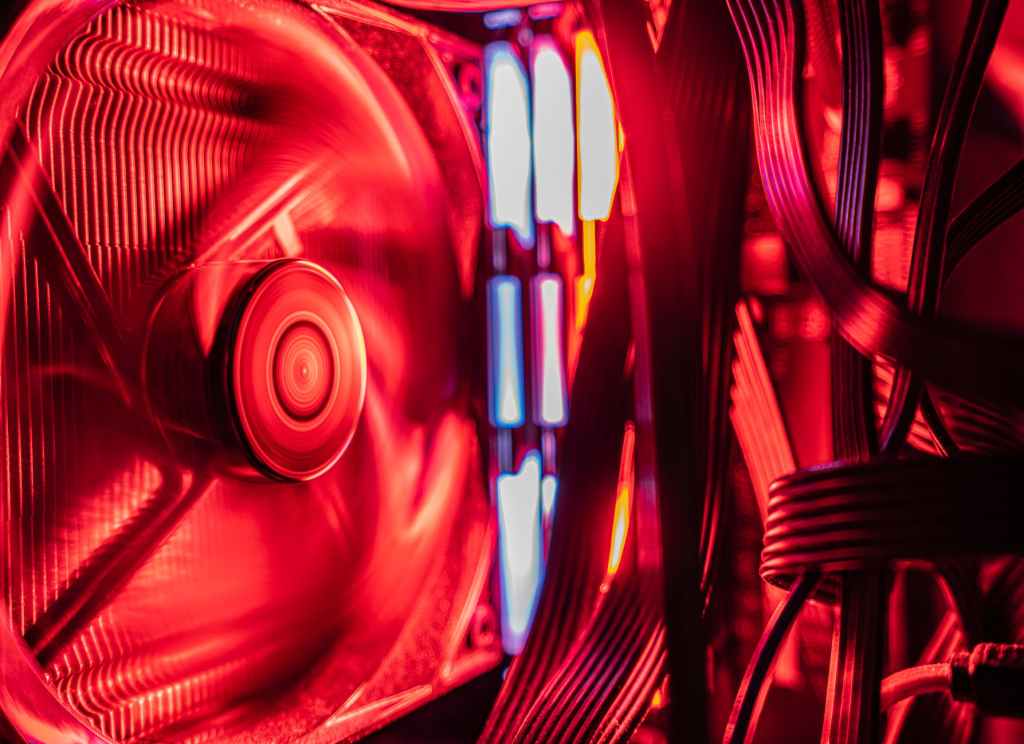
All of the computer’s components generate heat when they are in use, and it’s important to keep them cool to prevent damage and ensure optimal performance. The cooling system typically includes a combination of fans and heat sinks. Fans help to circulate air through the computer case and over the components, while heat sinks absorb heat from the components and dissipate it into the air.
These are not all the parts, but I’m in process of making notes about that.
 Curieous Conspects